
Urethral Stricture
If you are experiencing difficulty urinating, a weak urine stream, blood in the urine, or other urinary symptoms, you may be affected by urethral stricture disease. Left untreated, urethral strictures can lead to recurring infections, bladder problems, and other serious complications.
Discover the symptoms, causes, and treatment options available, including the minimally invasive Optilume® procedure.
What Is urethral stricture disease?
Urethral stricture disease occurs when there is an obstruction in the urethra that prevents the flow of urine and emptying of the bladder properly. The stricture will block the narrow passage of the urethra, making it difficult and painful to urinate. Urethral strictures are often caused by traumatic, inflammatory or ischemic processes that can lead to severe problems if left untreated.
Letting these issues go on too long without seeking medical treatment can cause kidney damage, urinary tract infections and general discomfort or pain with urination.
There are two main types of urethral strictures, which include:
- Posterior stricture: These strictures occur in the first few inches of the urethra. The type of stricture is often due to injury, such as a pelvic fracture, where the urethra is either disrupted or completely separated. This makes it impossible for urine to pass, so the patient would need a catheter — a thin, hollow medical tube — inserted to allow the urine to drain.
- Anterior stricture: This type of stricture occurs in the last few inches of the urethra and is most often caused by improper catheterization or direct trauma, such as falling on an object in a straddle position.
What causes a urethral stricture?
Numerous medical and traumatic complications can lead to urethral stricture, yet 30% of the causes[1] of this condition are unknown. Here are the most common factors that lead to this issue.
Infections
Sexually transmitted infections (STIs), such as chlamydia and gonorrhea, are among the most common causes of swelling and scarring in the urethra, creating urethral strictures.
Inflammation
Some skin conditions, such as Lichen sclerosis, create thin, white patches of skin in the genital area and lead to chronic inflammation, itching and bruising. Urinary tract infections (UTIs) can also create urethral strictures.
Medical complications
Certain treatments and surgeries can create scar tissue in the urethra that blocks urine flow, such as irritation from long-term catheters, kidney stone removal or prostate surgery. Benign prostatic hyperplasia (BPH) symptoms or previous surgery to remove or reduce an enlarged prostate gland can lead to strictures. Inserting an instrument, such as an endoscope, into the urethra may also be a cause.
Irregularities
Some people are born with improperly formed or irregular urinary structures and genitals. One example of this is Hypospadias, which is a congenital disorder where the opening of the urethra is located on the underside of the penis instead of the tip. Adults who were born with this condition will likely have more urethral strictures.
Damage or trauma
Injury or trauma to the genital and pelvic area can cause strictures, such as falling, damage from surgical tools or being hit in the genitals.
Cancer
Urethral or prostate cancer can create many complications, such as scarring or an enlarged prostate, in the urethra, leading to strictures. Radiation therapy treatment used to kill cancer cells in this region can also cause urethral strictures. Just over 2% of prostate cancer patients[2] can experience radiation-related urethral strictures.
Symptoms of Urethral Stricture
- Weak or slow urine stream
- Difficulty starting urination
- Incomplete bladder emptying
- Frequent urinary tract infections
- Frequent urge to urinate
- Blood in the urine
- Painful urinations
- Urinary retention
How Is urethral stricture diagnosed?
There are several ways for doctors to determine whether you have a urethral stricture, such as by conducting a physical exam or using ultrasound and X-rays to produce images of the urethra to locate the blockage. Doctors can also use a urinalysis (UA), urine culture or urethral culture to determine if you have a urethral stricture. Imaging and endoscopic examinations are often necessary to determine the cause of this condition.
Two other common procedures for urethral strictures are:
Urethroscopy
During this in-office procedure, a urologist inserts a small, lubricated urethroscope into the urethra. The scope contains a tiny camera that allows the doctor to view the inside of the urethra, identify areas of narrowing, and evaluate the structure and function of the urethral sphincter.
A flexible cystoscope may also be used to inspect the bladder for any abnormalities. The information gathered during the procedure helps the doctor determine the most appropriate treatment plan.
Some skin conditions, such as Lichen sclerosis, create thin, white patches of skin in the genital area and lead to chronic inflammation, itching and bruising. Urinary tract infections (UTIs) can also create urethral strictures.
Retrograde Urethrogram
A retrograde urethrogram is a specialized outpatient X-ray procedure used to evaluate urethral strictures in greater detail. During the test, a contrast dye is gently introduced into the urethra, allowing your doctor to view the entire urethra on X-ray images. This helps determine the location, length, severity, and number of strictures that may be present.
The detailed images produced during a retrograde urethrogram are important for diagnosing urethral strictures and planning the most effective treatment. In more complex cases, the test may be combined with additional imaging to better define the stricture and help surgeons prepare for a reconstructive procedure. It can also be used to evaluate urethral injuries caused by trauma and monitor healing after treatment.
Who is at risk of urethral strictures?
Urethral strictures are far more common in men than women because the male urethra is longer and more susceptible to injury, infection, and scarring. While women and children can develop strictures, they are much less common. People who experience recurrent urinary tract infections (UTIs), urethritis, or other chronic urinary conditions may also have an increased risk.
In the United States, urethral strictures account for more than 5,000 hospital admissions and 1.5 million healthcare visits among men each year. The condition is most common in adults over age 65.
Urethral stricture treatment options
People suffering from urethral strictures often need to undergo one or more treatment options, which can be surgical or minimally invasive, to avoid a worse issue. Urinary or testicular infections could develop, such as kidney stones, if left untreated. Likewise, excessive urinary retention can cause an enlarged bladder and other kidney problems.
Intermittent self-catheterization
Intermittent self-catheterization (ISC) allows patients with urethral strictures to empty their bladder by periodically inserting a thin catheter through the urethra. While ISC can help keep the urethra open and improve urine flow, it can be inconvenient and uncomfortable for some patients. Frequent catheter use may also increase the risk of infection, irritation, scarring, or urinary tract complications.
Urethral stricture dilation
Urethral dilation is a common, non-surgical treatment that uses specialized dilators or a balloon catheter to gently stretch the narrowed area of the urethra and improve urine flow. While the procedure can provide symptom relief, the effects may be temporary, and some patients require repeat treatments. Potential risks include infection, bleeding, and injury to the urethra.
Urethrotomy
An internal urethrotomy is a minimally invasive procedure that uses a specialized scope to locate and cut through scar tissue, opening the narrowed area of the urethra. The procedure is typically performed on an outpatient basis, and a temporary catheter is often placed afterward to aid healing. While it can provide effective short-term relief, some patients may experience recurrence and require additional treatment.
Urethroplasty
Urethroplasty is a reconstructive surgery used to treat urethral strictures, particularly those that are longer, more complex, or recurrent. Depending on the location and severity of the stricture, the procedure may involve removing the scarred section and reconnecting the urethra or rebuilding it using tissue grafts. While urethroplasty offers the highest long-term success rates, it is a more extensive procedure that requires recovery time and temporary catheter use after surgery.

Optilume® drug coated balloon dilation
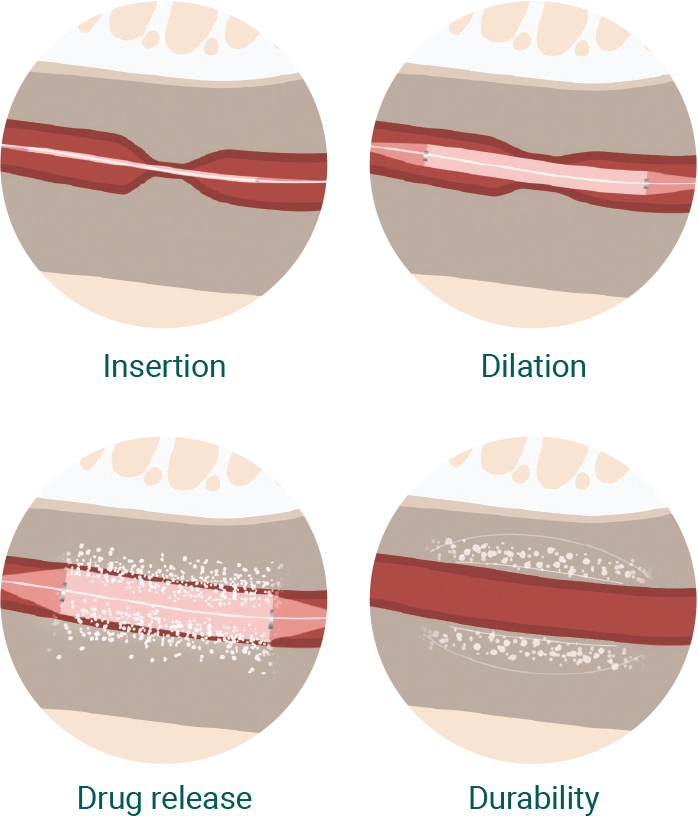
Optilume is the world’s first Drug Coated Balloon approved by the FDA to treat patients with Urethral Strictures. The Optilume Urethral Drug Coated Balloon technology simultaneously dilates and delivers an anti-proliferative medicine to the urethral stricture.
During the Optilume procedure, The Optilume device expands the scar tissue surrounding the urethral stricture creating a dilation and micro-fissures across the affected area. This allows the drug, paclitaxel, to be delivered directly to the stricture. This combined technique results in limiting scar tissue generation and helps prevent future stricture recurrence.
Optilume® is proven to provide superior results compared to the standard of care for endoscopic management. The ROBUST III Randomized Controlled Clinical Trial showed that 83% of patients remained free from re-treatments for their urethral stricture 1 year after their Optilume procedure.[3]